Alkhalili reviewed the results of the efforts implemented by the Ministry of Women’s Affairs during 2024 – 2026 and identify the priorities of the coming period.
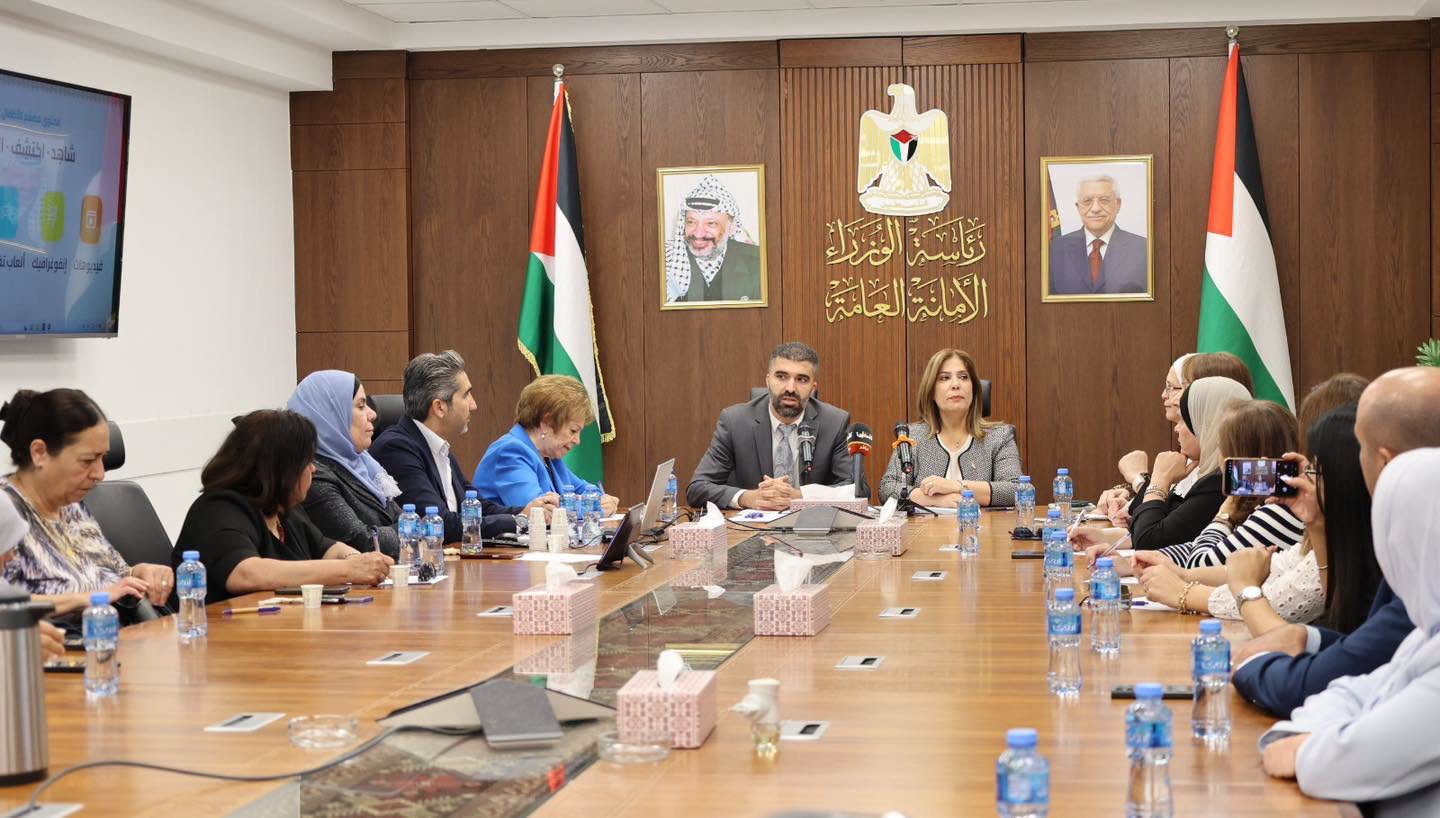
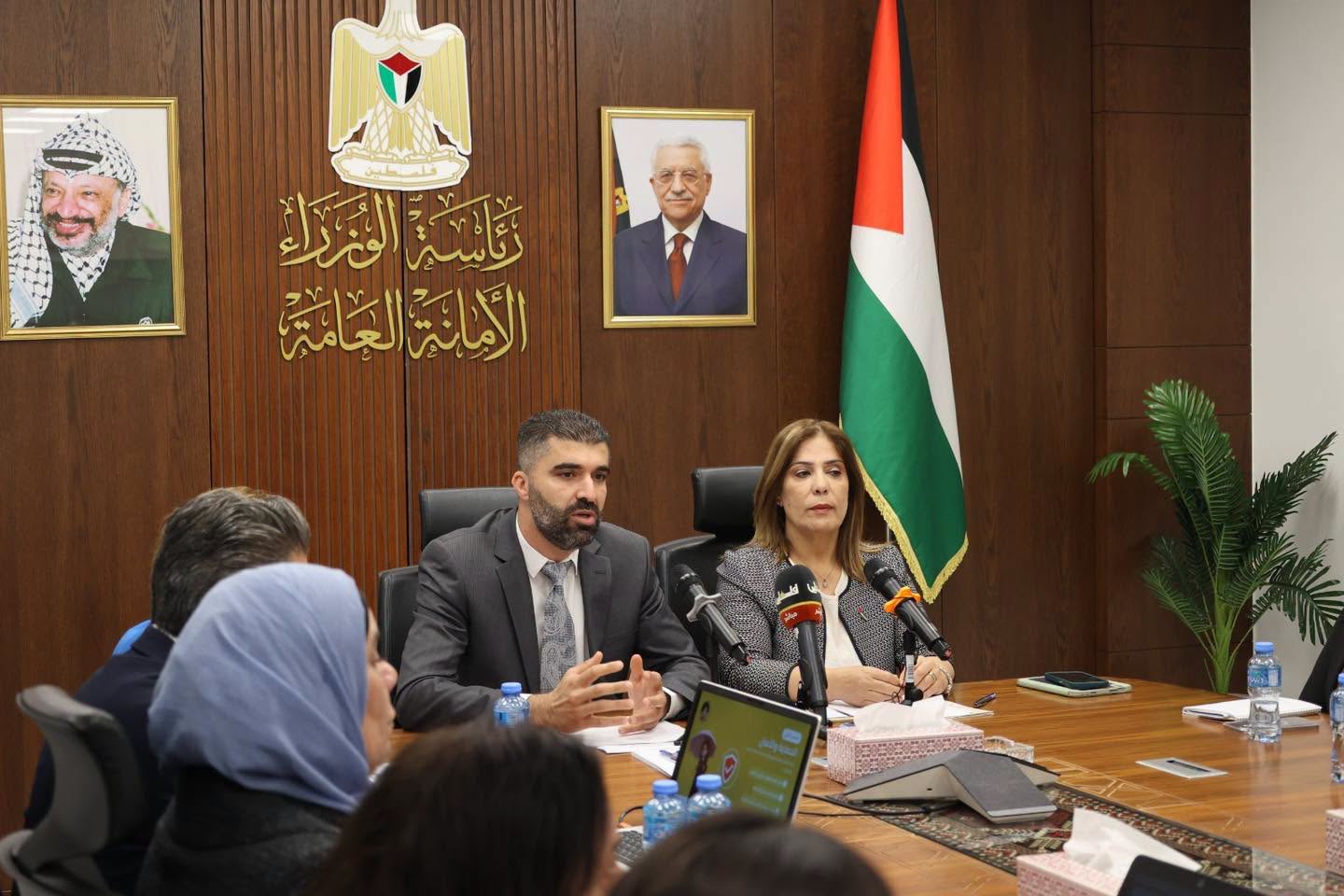
The Minister of Women’s Affairs, Ms. Mona Al Khalili, conducted a briefing at the General Secretariat of the Council of Ministers, in the presence of Dr. Muhammad Abu Al-Rub, the government official spokesperson, Intisar Al-Wazir, President of the General Union of Palestinian Women, and representatives of women’s civil society organizations. During the briefing, she reviewed the Ministry’s most prominent achievements and interventions during the nineteenth government phase, from April 2024 to April 2026, and the efforts made to promote gender equality, empower Palestinian women, protect their rights, and enhance their political, economic, and social participation. The briefing also addressed the exerted efforts to strengthen the resilience of Palestinian women and their presence in various fields, the Ministry’s priorities for the coming period, and national plans and policies aimed at achieving gender equality and empowering Palestinian women in various sectors.
Al Khalili affirmed that the ministry has worked during the past two years to strengthen the national protection system, develop policies and legislation regulating women’s rights, expand opportunities for political, economic, social and legal empowerment, and enhance the presence of women’s issues in government policies. In addition, the Ministry of Women’s Affairs also worked on intensifying international advocacy and lobbying efforts, within the framework of its responsibility to lead national policies to improve the conditions of Palestinian women and girls.
Al Khalili explained that the ministry implemented 61 economic initiatives through grassroots women's associations, with grants totaling €305,000, to support small and micro enterprises and enhance women's economic opportunities. She emphasized that sustainable economic empowerment requires going beyond financial support to include training, marketing, and expanded market access, thereby strengthening women's ability to develop their businesses and achieve sustainable income.
Regarding political empowerment, Al Khalili noted the Ministry's cooperation with the Central Elections Commission to enhance women's participation in political life and elected bodies, including the development of a code of conduct that supports women's participation and fosters a more equitable electoral environment. The percentage of women elected in the 2026 local elections reached approximately 25.6%, underscoring the importance of continuing efforts to strengthen women's presence in leadership and decision-making positions.
In the area of protection, Al Khalili affirmed the Ministry's continued work through the Supreme or Higher National Committee for Combating Violence Against Women, and its efforts to strengthen the national referral system that support coordination among institutions concerned with protection, shelter, and legal, psychological, social, and health support. The Ministry also worked to develop the role of the National Observatory for Violence Against Women in monitoring patterns of violence, analyzing sources of risk and gaps in institutional response, and using data and evidence to guide policies and preventive interventions, with particular attention to the most marginalized women and groups facing compounded and shoulder doubled risks.
As part of developing legislation governing women's and family rights, Al Khalili explained that the Ministry, in cooperation with the Ministry of Social Development, the Ministry of Justice, the Sharia judiciary, civil society organizations, and human rights bodies, worked on developing a draft of Personal Status Law, reaching a mutually agreed-upon version that strengthens guarantees of justice and equity and addresses gaps that may limit women's enjoyment of their rights. The Ministry also continued to review policies and procedures related to the rights of women and girls, enhancing their consistency with the principles of equality, justice, and human rights.
In the context of promoting the integration of a gender perspective in government work, Al Khalili indicated that the ministry initiated a proposal to study the reality of gender units in line ministries, and a government decision was issued in this regard, with the aim of evaluating the role of these units and their institutional status, and enhancing their ability to participate in preparing plans, policies, programs and budgets and following up on their implementation, in order to, make equality and equal opportunities a shared responsibility among various government institutions.
In the area of awareness and research, Al Khalili explained that the Ministry launched the "Hind and Yousef" digital awareness platform for children, aiming to promote awareness of the values of equality, social justice, respect, cooperation, and acceptance of others through awareness tools tailored to children's needs. She added that the Ministry has also strengthened its collaboration with universities and academic institutions in research and studies, contributing to the production of knowledge related to women's issues and the development of an evidence base to support the formulation of national policies and programs.
At the national partnership level, Al Khalili affirmed that the Ministry has worked to enhance coordination and integration of roles among governmental institutions, civil society organizations, women's organizations, human rights institutions, and international partners. She noted that a participatory audit process was conducted with the involvement of ten national institutions, as part of efforts to develop institutional work and direct resources toward national priorities related to women. She emphasized the crucial role of grassroots women's associations in reaching women in local communities and marginalized areas and conveying their needs to decision-making bodies.
In the area of international advocacy and lobbying, Al Khalili affirmed that the Ministry continued its efforts to highlight the violations suffered by Palestinian women, mobilize international support for their rights, and hold the occupation accountable. She explained that these efforts, in conjunction with Palestinian and international initiatives, contributed to strengthening the documentation of violations related to sexual violence in the context of the conflict and the formation of an international commission of inquiry, chaired by Ms. Pramila Patten, the UN Special Rapporteur on Sexual Violence in Conflict, culminating in the inclusion of the occupation on the blacklist for its use of sexual violence as a weapon of war. Al Khalili added that the efforts of the Ministry of Women’s Affairs, in partnership with the Ministry of Foreign Affairs and the State of Palestine’s missions in Geneva and New York, contributed to mobilizing international support for Palestinian women’s rights, culminating in the adoption by the UN Economic and Social Council of a resolution specifically addressing the situation of Palestinian women under occupation, thus reinforcing the presence of the Palestinian women’s issue on the UN agenda.
She added that among the most prominent milestones of the Ministry’s regional and international presence during this period was its chairmanship of the Arab Women’s Committee in the social sector of the League of Arab States for the year 2025, and its election as Vice President of the Organization for Women’s Development affiliated with the Organization of Islamic Cooperation, in addition to, the “Jerusalem, Capital of Arab Women 2025” initiative, which enhances the presence of Palestine and Palestinian women’s issues in Arab and Islamic forums.
As part of promoting youth participation in gender issues, Al Khalili pointed to the formation of the Youth Advisory Council for Gender Issues, which enhances youth participation and integrates their orientations into work related to women’s and gender issues.
Al Khalili stressed that the achievements of the past two years form the basis for continuing to develop national policies and enhance the effectiveness of institutions, stressing that the reality of Palestinian women cannot be separated from the reality of the Palestinian people under occupation, and that protection and empowerment are linked to the Palestinian people’s right to survival, steadfastness, freedom and independence, and that international advocacy must go beyond documenting violations and issuing statements to practical steps that enhance protection, accountability and respect for international law.
Regarding the priorities for the next phase, Al Khalili identified the most prominent ones as follows:
* Strengthening the national protection system and developing mechanisms for responding to violence against women and girls, with a focus on dangerous cases and the most marginalized women, and enhancing integration between relevant institutions.
* Intensify international pressure and advocacy to protect Palestinian women and girls, promote accountability for violations and ensure respect for international law, and support the Palestinian people’s right to freedom, independence and the establishment of their sovereign, independent Palestinian state with East Jerusalem as its capital.
* Expanding opportunities for sustainable economic empowerment, linking women’s projects to financing, training, marketing and market access, with a focus on their impact on women’s income and independence.
* To enhance women’s participation in political life and decision-making positions, and to work to remove obstacles that limit and hinder their leadership presence and active participation in elected institutions and public life.
* Using and operating data from the National Observatory for Violence Against Women to develop policies and preventive interventions, identify gaps and the parties responsible for addressing them, and mechanisms for monitoring progress.
* Continuing to strengthen the position of gender units in line ministries, and enabling them to play their role in planning, policy preparation, budgeting, monitoring and evaluation.
* Developing partnerships between the government, civil society organizations, women's organizations, and international partners, to ensure the integration of efforts and the direction of resources towards the actual needs of women and girls.
* To enhance youth participation in gender issues, and to develop partnerships with them in awareness, initiatives and related policies.
At the conclusion of the meeting, Al Khalili emphasized the importance of enacting legislation that protects the rights of women and families and promotes justice and equality. She highlighted the regional program implemented by the Ministry in partnership with UN Women, which aims to increase women's participation in the labor market and expand their economic opportunities. She stressed the need for continued coordination and collaboration with governmental institutions, civil society organizations, and international organizations to develop programs and projects that enhance women's economic empowerment, including cash-for-work programs, and to provide more sustainable opportunities for women, with particular attention to the rights of women with disabilities and ensuring their inclusion in national policies and programs. She affirmed that national partnership and the integration of efforts among various institutions constitute a fundamental pillar for promoting the rights of Palestinian women, responding to their needs, and expanding their participation in economic, social, and political life.
Related topics
- Alkhalili reviewed the results of the efforts implemented by the Ministry of Women’s Affairs during 2024 – 2026 and identify the priorities of the coming period.
- The Deputy Minister of the Ministry of Women's Affairs, Ms. Buthaina Al Salem, participated in the regional workshop on capacity building for data systems and evidence-based monitoring.
- AlKhalili: International Commitments to Palestinian Women Must Translate into Protection, Accountability and Concrete Action
- The minister of Women’s Affairs meets with the General Secretary of the International Trade Union Confederation and discusses the conditions of Palestinian working women and ways to enhance their rights.
- The minister of Women’s Affairs welcomed the representative of Finland to the State of Palestine and discuss joint cooperation
- Al Khalili and Abu Hamda emphasize the importance of integrated efforts to enhance the resilience and empowerment of women in Qalqilya Governorate.
- The Ministry of Women's Affairs discusses with women's organizations enhancing women's resilience and expanding their participation.
- The Minister of Women's Affairs and the honorable Governor of Qalqilya visit the Ajyal Association for the Care of the Elderly.
- The Ministry of Women's Affairs and the Governor of Qalqilya Governorate meet with local councils in Seniria, Izun Atma, and Beit Amin to discuss their needs and strengthen women's resilience.
- The Ministry of Women's Affairs and "Reform" launch the National Feminist Policy to enhance the resilience of Palestinian women in the context of the occupation.